

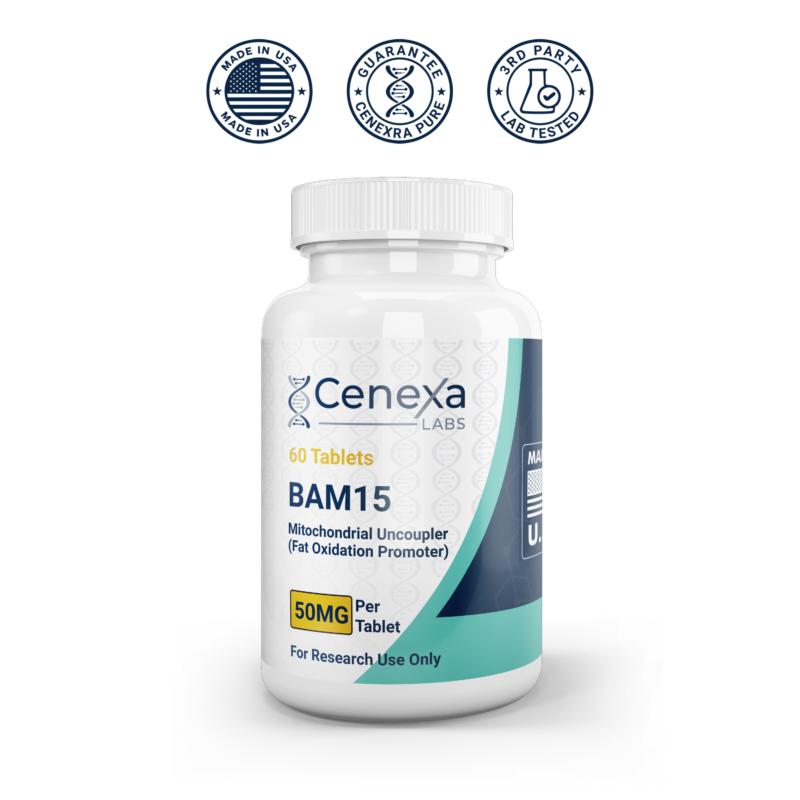
BAM15
$219.99
Cenexa Labs Klow: Explore BAM15 research information, product specifications, laboratory applications, quality documentation, and safety considerations.
Cenexa Labs Klow: BAM15 Research Compound and Product Information
BAM15 is a synthetic small molecule that has attracted scientific interest because of its role in mitochondrial energy metabolism research. For laboratories investigating cellular bioenergetics, metabolic pathways, and mitochondrial function, understanding the compound’s characteristics, research history, and limitations is essential. This guide to Cenexa Labs Klow provides an informative overview of BAM15, its scientific background, available product information, and important considerations for researchers in the United States.
Cenexa Labs lists BAM15 in its peptide capsule category, presenting it as a research-use-only product. However, BAM15 is chemically a small molecule rather than a peptide. This distinction matters when evaluating product descriptions, scientific literature, and laboratory documentation.
Researchers looking for BAM15 information should prioritize accurate chemical identification, transparent documentation, and a clear understanding of the compound’s regulatory status. Although preclinical research has generated interest in BAM15, findings from laboratory and animal studies do not establish safety or effectiveness in humans.
Cenexa Labs Klow: Understanding BAM15 and Its Scientific Background
BAM15, also known as BAM-15, is a synthetic compound studied for its effects on mitochondrial function. Mitochondria are cellular structures responsible for producing much of the energy cells use to perform their activities. Scientists study these structures to understand how cells process nutrients, regulate energy production, and respond to metabolic changes.
BAM15 belongs to a research area involving mitochondrial uncoupling. This process changes the relationship between the movement of protons across the inner mitochondrial membrane and the production of adenosine triphosphate, commonly known as ATP.
The compound’s mechanism makes it relevant to specialized investigations of cellular energy expenditure and metabolic regulation. Nevertheless, its scientific significance should not be confused with evidence supporting a consumer health product.
For anyone researching Cenexa Labs Klow and BAM15, the most important starting point is distinguishing established chemical properties from experimental findings and unverified marketing claims.
What Is BAM15?
BAM15 is a synthetic mitochondrial uncoupler investigated primarily in preclinical research. Unlike conventional dietary supplements, it is not an established nutritional ingredient. It is also not accurately classified as a peptide simply because a supplier places it in a peptide product category.
Researchers have investigated BAM15 to better understand mitochondrial respiration and the relationship between energy consumption and ATP production. Early animal studies have reported changes in metabolic outcomes, including body weight and insulin sensitivity. However, these findings cannot automatically be applied to people.
BAM15 has not been established as an FDA-approved treatment for obesity, diabetes, or other medical conditions. Its human safety profile and appropriate clinical use have not been established.
This makes careful scientific interpretation especially important. Research interest is a reason to investigate a compound further, not proof that it offers a safe or effective treatment.
Cenexa Labs Klow and the Potential Research Applications of BAM15
Scientific interest in BAM15 spans several areas of experimental biology. The following applications describe research questions rather than proven medical benefits.
Mitochondrial Function Research
Mitochondrial function is central to cellular energy production. Researchers study mitochondrial respiration to understand how cells respond to different energy demands and metabolic conditions.
BAM15 has been investigated as a tool for examining mitochondrial uncoupling. Such research can help scientists explore relationships between oxygen consumption, ATP production, and cellular energy balance.
Metabolic Pathway Investigations
Metabolic research examines how organisms process and store energy. Researchers investigate these pathways to understand complex biological processes involving nutrients, cellular activity, and energy expenditure.
BAM15 has been studied in experimental models of metabolic dysfunction. Nevertheless, results from animal models require further investigation before any conclusions about human health can be justified.
Cellular Bioenergetics
Cellular bioenergetics focuses on the processes through which cells obtain and use energy. Laboratory studies in this field may investigate mitochondrial respiration, metabolic efficiency, and changes in cellular energy production.
BAM15’s effects on mitochondrial proton gradients make it relevant to certain experimental questions within this discipline.
Preclinical Scientific Investigations
Preclinical research helps scientists investigate compounds before potential clinical development. This work can involve laboratory experiments, cellular models, and animal studies.
BAM15 research remains limited by the gap between experimental findings and established human clinical evidence. Researchers should therefore evaluate individual studies carefully and avoid treating preliminary results as confirmed therapeutic outcomes.
Where Can Researchers Find BAM15 Product Information?
Researchers seeking information about the BAM15 product listed by Cenexa Labs can consult the supplier’s product page:
Product information: cenexalabs.com/product/peptides/peptide-capsules/bam15-peptide/
The page identifies BAM15 as a research-use-only product and provides product-specific information. At the time of checking, the listing displayed an out-of-stock status, so current availability should be confirmed directly with the supplier.
The website is a source of product information, but its listing alone does not establish independent verification of every quality claim or confer official authorization to market BAM15 for human use.
Before considering any laboratory chemical supplier, researchers should examine the following factors.
Product Identification and Specifications
A clear product listing should identify the compound accurately and distinguish it from substances with similar names. Product specifications should also state the listed formulation and relevant quantity.
For BAM15, researchers should confirm the chemical identity rather than relying solely on a broad category such as peptide capsules.
Certificate of Analysis
A Certificate of Analysis, or COA, may provide information about a specific batch’s identity, purity, and analytical testing.
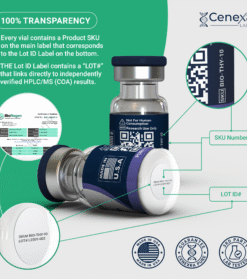
Researchers should check whether the documentation corresponds to the actual lot being evaluated. A generic certificate without a matching batch identifier may provide insufficient evidence for research traceability.
Independent Analytical Testing
Analytical methods such as high-performance liquid chromatography and mass spectrometry can help characterize a chemical sample.
However, a purity result alone does not establish that a compound is safe for people, suitable for a particular experiment, or compliant with every applicable regulatory requirement.
Transparent Supplier Information
Researchers should look for identifiable business contact details, clear product specifications, accessible documentation, and straightforward research-use restrictions.
These measures support more informed supplier evaluation without assuming that any single website or marketing statement guarantees product quality.
Why Research Documentation Matters When Evaluating Cenexa Labs Klow
Reliable documentation is an important consideration when sourcing materials for scientific work. Differences in chemical identity, purity, formulation, and storage conditions can affect experimental reproducibility.
A well-documented research material should have a clear identification record and supporting analytical information. Where applicable, documentation should allow the laboratory to connect the material received with its corresponding batch records.
Researchers should also distinguish between a supplier’s own quality claims and independently established evidence. Statements about manufacturing location, purity, testing, or certification should be checked against the relevant documentation rather than accepted solely because they appear in promotional material.
For laboratories in the United States, appropriate chemical handling, institutional safety procedures, and applicable legal requirements should remain central to procurement decisions.
Important Safety and Regulatory Considerations
BAM15 is not FDA-approved for human use. It should not be treated as an established medication, dietary supplement, or clinically validated weight-management product.
The absence of established human safety data is a significant limitation. Experimental results in animals do not determine safe human exposure, appropriate dosing, long-term effects, or potential interactions with medicines.
Because BAM15 affects mitochondrial energy metabolism, its biological effects warrant careful scientific evaluation. Unregulated use of experimental metabolic compounds may expose people to serious and unpredictable risks.
A research-use-only label does not establish that a substance is safe for self-experimentation. It also does not independently determine whether a particular sale or marketing practice complies with U.S. law.
Researchers should follow appropriate institutional protocols and applicable regulations. Individuals seeking help with weight management, diabetes, or another health concern should consult a qualified healthcare professional rather than attempt to use an experimental compound.
Cenexa Labs Klow: Frequently Asked Questions
Is BAM15 a peptide?
No. BAM15 is a synthetic small molecule studied for its effects on mitochondrial function. A supplier’s decision to place it in a peptide category does not change its chemical classification.
Is BAM15 FDA-approved?
No. BAM15 is not FDA-approved for human therapeutic use. Research findings do not establish an approved medical indication.
Can BAM15 be used as a weight-loss treatment?
BAM15 is not an established weight-loss treatment. Findings from preclinical research cannot demonstrate that it is safe or effective for weight management in humans.
Where can I find the Cenexa Labs BAM15 listing?
The product information is available at https://cenexalabs.com/product/peptides/peptide-capsules/bam15-peptide/. The supplier’s current stock status, product specifications, and documentation should be checked directly.
What should laboratories check before evaluating a BAM15 supplier?
Laboratories should review chemical identity, batch-specific analytical documentation, traceability, handling requirements, supplier transparency, and compliance with applicable regulations.
Does a certificate of analysis guarantee safety?
No. A COA may help establish the identity or purity of a tested batch, but it does not demonstrate human safety, clinical effectiveness, or FDA approval.
Final Overview: Cenexa Labs Klow and BAM15 Research
BAM15 represents an area of scientific interest in mitochondrial bioenergetics and preclinical metabolic research. Its experimental mechanisms have prompted investigations into cellular energy regulation, but important questions about human safety and clinical effectiveness remain unresolved.
For readers exploring Cenexa Labs Klow, the most useful approach is to evaluate the chemical’s scientific background, verify the accuracy of product specifications, and review the limitations of the available evidence.
Cenexa Labs provides an online listing for BAM15 that researchers can consult for product-specific information. Any assessment of the supplier should be based on verifiable documentation, current availability, and applicable regulatory requirements rather than unsupported promotional claims.
Research-use notice: BAM15 is intended for lawful laboratory research, not human consumption, self-experimentation, or the diagnosis, treatment, cure, or prevention of disease. This description is educational and does not constitute medical advice.
Be the first to review “BAM15”
Related products
Bioregulators
Peptide capsules
Peptide capsules
Bioregulators
Bioregulators
LAB SUPPLIES
Bioregulators
Bioregulators
Reviews
There are no reviews yet.