

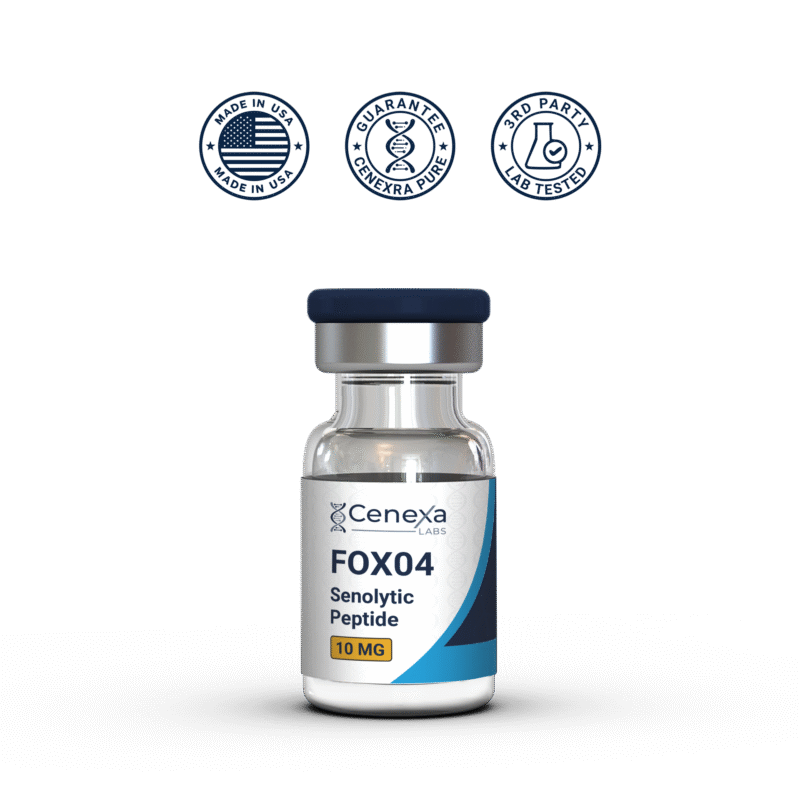
Cenexa Labs Klow FOXO4-DRI Peptide: Research Overview and Buying Guide
Cenexa Labs Klow FOXO4-DRI: An Essential Research Peptide Overview
FOXO4-DRI is an experimental peptide that has attracted scientific interest because of its potential role in cellular senescence research. For researchers investigating cellular signaling, aging-related biological processes, and peptide-based research compounds, understanding the scientific background, documentation, and limitations of FOXO4-DRI is an important first step.
When searching for Cenexa Labs Klow FOXO4-DRI, buyers in the United States should prioritize accurate product information, transparent supplier documentation, and responsible research practices. A product listing should provide enough information for qualified researchers to evaluate what is being offered without relying on exaggerated marketing claims or unsupported promises.
This guide explores FOXO4-DRI, explains important purchasing considerations, and outlines how to evaluate online research-peptide listings before making a decision.
What Is FOXO4-DRI?
FOXO4-DRI is a synthetic peptide investigated in preclinical research involving cellular senescence. It was developed to interfere with interactions involving FOXO4 and p53, molecular components associated with cell survival and stress responses.
In scientific research, cellular senescence describes a state in which cells stop dividing while remaining metabolically active. Senescent cells can influence surrounding tissues through the release of signaling molecules. Researchers are interested in understanding how these cells develop, how they affect biological systems, and whether their behavior can be modified.
FOXO4-DRI has been studied as an experimental tool in this area. However, research findings do not establish that it is a proven treatment for aging, a clinically validated longevity product, or a safe compound for human use.
For anyone evaluating FOXO4-DRI peptide information, the distinction between laboratory findings and established medical evidence is essential.
Why Is FOXO4-DRI Discussed in Scientific Research?
Interest in FOXO4-DRI is connected to the broader scientific investigation of cellular senescence and the mechanisms that regulate cell survival.
Researchers study this compound to better understand selected molecular interactions and their potential effects in experimental biological systems. Such investigations can contribute to basic scientific knowledge, but promising preclinical results do not automatically translate into effective or safe human treatments.
The scientific value of a research compound depends on the quality of the experimental design, the reliability of the results, and whether independent studies reproduce the findings.
Anyone researching FOXO4-DRI should therefore consult peer-reviewed publications and evaluate claims according to the available evidence rather than relying solely on product descriptions.
Where to Find FOXO4-DRI Online in the United States
People searching for FOXO4-DRI online may encounter specialist research-chemical websites, peptide suppliers, and laboratory-product catalogs. Before purchasing, it is important to verify the identity of the seller and establish whether the product is appropriate for the intended lawful research application.
The following product page is provided as a starting point for reviewing the listing, not as an independent endorsement of the seller:
Product listing: FOXO4-DRI at CenexaLab.com
Before placing an order, review the supplier’s current product specifications, business information, shipping policies, and available quality documentation. Confirm whether the seller provides batch-specific analytical results and whether those results can be independently verified.
The name Cenexa Labs Klow may be useful as a search phrase when locating related product information. However, verify the exact business name and website identity before treating any website as an official or authorized source. Do not assume that a seller is manufacturer-authorized without supporting evidence.
Important Quality Checks Before Buying Research Peptides
Choosing a research compound requires more than comparing product prices or promotional language. Reliable documentation helps qualified researchers determine whether a product meets their experimental requirements.
1. Review the Certificate of Analysis
A Certificate of Analysis, or COA, should identify the material tested and provide relevant analytical findings. Whenever possible, look for documentation tied to the specific production batch being offered.
Check whether the report identifies the testing laboratory, analytical methods, sample identification, and results. A generic document without a clear connection to the listed product provides limited assurance.
2. Examine Identity and Purity Information
Product identity and purity are separate considerations. Analytical methods such as mass spectrometry and high-performance liquid chromatography may help characterize a peptide and assess its purity, depending on the method and the questions being investigated.
Do not interpret a stated purity percentage as proof of clinical safety, sterility, manufacturing quality, or suitability for human administration.
3. Verify Supplier Transparency
A trustworthy supplier should provide clear business contact information, understandable policies, and accurate product descriptions. Review shipping restrictions, refund conditions, and procedures for reporting discrepancies.
For United States customers, confirm that the proposed transaction and intended use comply with applicable federal and state requirements.
4. Avoid Unsupported Marketing Claims
Be cautious of listings that promise dramatic anti-aging effects, guaranteed cellular rejuvenation, or proven health improvements without appropriate clinical evidence.
Scientific terminology alone does not establish product quality. Responsible product information should distinguish verified analytical findings from preliminary research and speculation.
FOXO4-DRI Research: Potential and Limitations
The principal research interest in FOXO4-DRI concerns its proposed interaction with molecular pathways involved in cellular senescence. This makes the peptide relevant to certain investigations into cell biology and aging-related mechanisms.
Nevertheless, substantial limitations remain. Preclinical research cannot independently establish the safety, effectiveness, appropriate dosing, or long-term effects of a compound in humans. Results from laboratory models may not predict what happens in people.
FOXO4-DRI should not be presented as an approved anti-aging medicine or a substitute for established medical care. It is important to distinguish scientific exploration from medical treatment and to avoid using experimental research compounds outside appropriate, legally authorized settings.
How to Evaluate Cenexa Labs Klow Product Information
When reviewing Cenexa Labs Klow and its FOXO4-DRI listing, consider whether the available information answers the following questions:
- Is the compound’s identity clearly stated?
- Are product specifications and batch details available?
- Is there a verifiable, batch-specific Certificate of Analysis?
- Are analytical methods and testing limitations explained?
- Are business contact details and purchase policies transparent?
- Does the listing avoid unsupported medical claims?
- Are shipping and intended-use restrictions clearly communicated?
These questions provide a practical framework for comparing research suppliers. They also help separate verifiable product information from promotional statements.
No single document guarantees that a product is suitable for every research application. Qualified researchers should assess the evidence and documentation against their own laboratory’s requirements.
Frequently Asked Questions About FOXO4-DRI
What is FOXO4-DRI used for in research?
FOXO4-DRI is an experimental peptide investigated in preclinical studies involving cellular senescence and molecular pathways associated with cell survival. It is not an established human treatment.
Where can I find the FOXO4-DRI product listing?
The referenced listing is available at CenexaLab.com. Review the current listing and independently verify supplier identity, documentation, and applicable purchasing restrictions before proceeding.
Is FOXO4-DRI an approved anti-aging treatment?
It should not be represented as an approved anti-aging treatment. Experimental findings do not establish clinical efficacy or safety in humans.
What should researchers check before purchasing FOXO4-DRI?
Researchers should evaluate compound identity, batch-specific analytical documentation, supplier transparency, applicable legal requirements, and the suitability of the material for the intended research purpose.
Does peptide purity guarantee safety?
No. Purity results alone do not establish sterility, the absence of every contaminant, clinical safety, or suitability for administration to humans.
Final Thoughts on Cenexa Labs Klow FOXO4-DRI
FOXO4-DRI remains a subject of scientific interest in research involving cellular senescence and related molecular pathways. Anyone investigating Cenexa Labs Klow FOXO4-DRI should focus on credible scientific evidence, transparent product information, and verifiable quality documentation.
The CenexaLab.com product page offers a place to begin reviewing the listed compound, but its claims and supplier credentials should be independently assessed. By prioritizing documentation over promotional promises, researchers can make better-informed decisions while maintaining responsible laboratory practices.
Ultimately, accurate scientific information, careful supplier evaluation, and appropriate regulatory compliance are more valuable than claims of guaranteed results. These principles support a more transparent and evidence-based approach to evaluating FOXO4-DRI research materials.
Research disclaimer: This content is for informational and educational purposes only. FOXO4-DRI is experimental and should not be treated as a proven medicine or used for human consumption. Verify applicable regulations and consult qualified professionals regarding research safety and compliance.
Be the first to review “FOXO4-DRI”
Related products
Topical Peptides
Peptide capsules
Peptide Blends
Topical Peptides
Topical Peptides
LAB SUPPLIES
Bioregulators
Bioregulators
Reviews
There are no reviews yet.